
Coastal Kale Loop: Year-Round Greenery for You and Your Flock
If you’re farming on less than an acre in a coastal climate, every square foot has to pull double duty. You need crops that handle the salt air, laugh at the constant drizzle, and provide high-value nutrition.
Enter: Kale.
While many gardeners see kale as just another salad green, for the small-scale coastal farmer, it’s the ultimate “closed-loop” crop—especially if you keep chickens.
Kale is also a green burst of energy and hope that Spring will be back, even on those coastal gloomy days!
Why the Coast is “Kale Country”
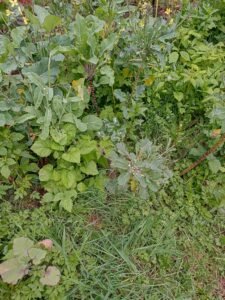
Kale belongs to the brassica family, and it thrives in the cool, damp conditions of the Pacific Northwest and similar coastal zones.
- Low “Bolt” Risk: Unlike inland gardens where a week of 90-degree weather sends kale to seed, our coastal marine layer keeps it in a perpetual state of growth.
- The Frost Factor: Coastal winters are mild, but the occasional light frost is actually a blessing. It triggers the plant to convert its starches into sugars, making the leaves sweeter for both you and your hens.
The Chicken Connection: Year-Round Superfood
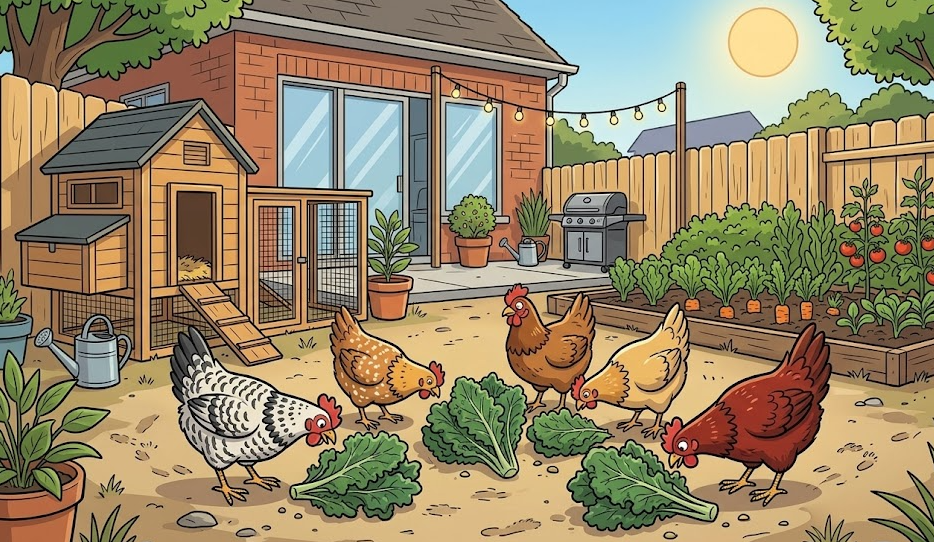
On a small farm, feed costs can add up, and “pasture-raised” eggs depend on your birds having access to fresh greens. In the dead of January, when the grass is dormant or waterlogged, kale is the MVP of the coop.
1. The Winter Vitamin Boost
When the landscape turns grey, kale stays vibrant green. It’s packed with Vitamin K, A, and C. For your chickens, this means orange-gold yolks even in the middle of winter and stronger immune systems to fight off respiratory issues caused by damp coastal air.
When the landscape turns grey, kale stays vibrant green. It’s packed with Vitamin K, A, and C. For your chickens, this means orange-gold yolks even in the middle of winter and stronger immune systems to fight off respiratory issues caused by damp coastal air.
2. Natural Boredom Buster
Coop fever is real. Hanging a whole kale stalk from the top of the run creates a “veggie piñata.” It keeps the girls active, pecking, and occupied, which reduces feather picking and stress.
Coop fever is real. Hanging a whole kale stalk from the top of the run creates a “veggie piñata.” It keeps the girls active, pecking, and occupied, which reduces feather picking and stress.
3. Calcium for Strong Shells
Kale is a surprising source of calcium. While it doesn’t replace oyster shells, it’s a bioavailable supplement that helps your hens produce sturdy eggs throughout their laying cycle.
Kale is a surprising source of calcium. While it doesn’t replace oyster shells, it’s a bioavailable supplement that helps your hens produce sturdy eggs throughout their laying cycle.
Tips for Your “Sub-Acre” Kale Patch
- Transplant for a Head Start: Because our coastal soil stays cold and wet longer, start seeds in a greenhouse or windowsill and transplant once they have 3–4 true leaves.
- The “Bottom-Up” Harvest: Always pick the lowest, oldest leaves first for the chickens. This keeps air flowing around the base of the plant (crucial for preventing mold in high humidity) and allows the center “crown” to keep producing upward.
- Variety Matters: For the coast, try ‘Lacinato’ (Dino Kale)—its bumpy texture holds up well to heavy rain—or ‘Winterbor’, which is famous for its extreme cold hardiness.
We’ve had really great luck with seeds from Baker Creek Heirloom Seeds and Territorial Seeds
Closing the Loop
By growing a dedicated “chicken row” of kale, you’re turning coastal rain and cool breezes into high-quality eggs. It’s a low-input, high-output strategy that proves you don’t need 40 acres to run a productive farm.
Leave a Reply